Showing posts with label Eye Candy. Show all posts

Thursday, November 19, 2009

Eye Candy of the Day: Stuff found in my desk


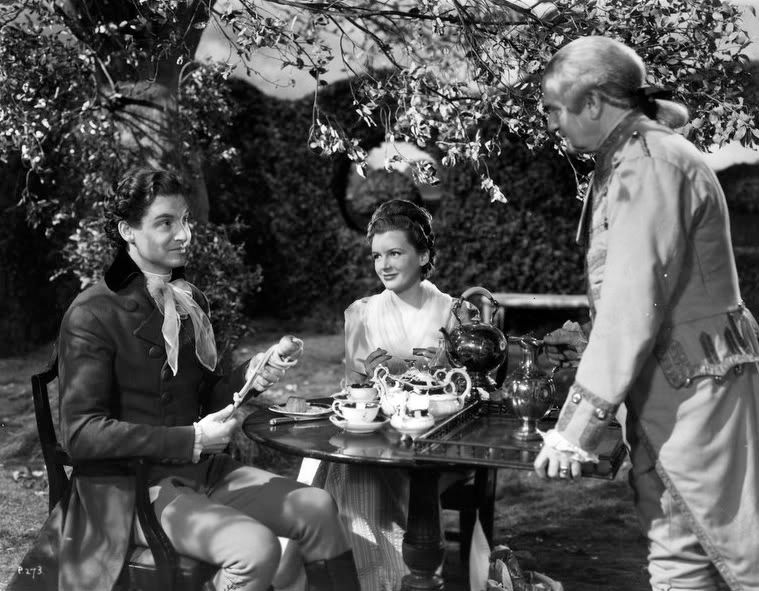
As you all know, I'm a little OCD. Hence the name of this blog. One of my symptoms is an hoarding problem, especially when it comes to movie star memorabilia. Recently I had to move offices at work and the upside was that I cleaned a shitload of stuff out of my desk. I found this rather large cardboard portfolio of stills that I purchased on EBAY and never scanned. So in upcoming weeks you all will reap the benefits of my madness.

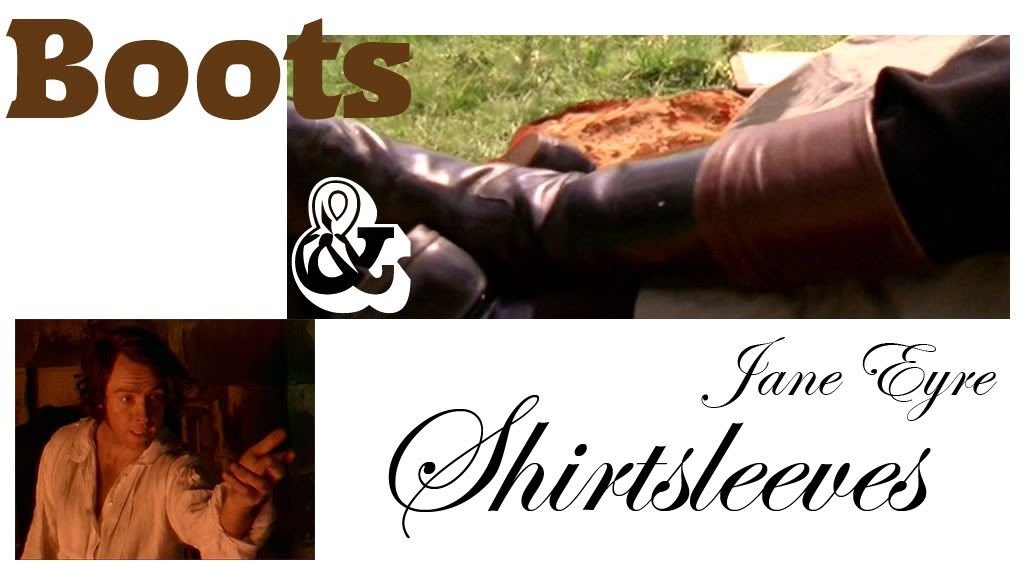
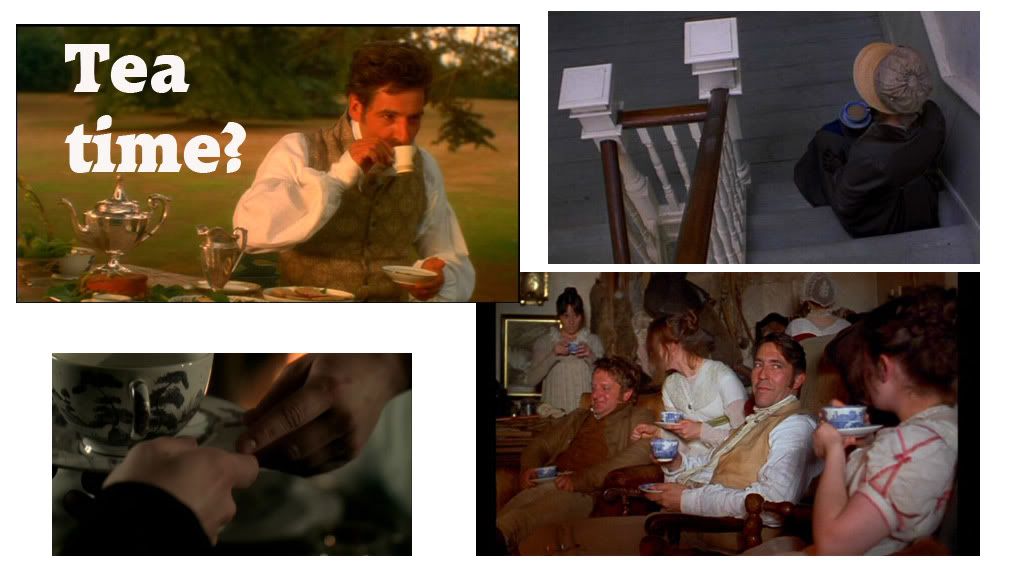
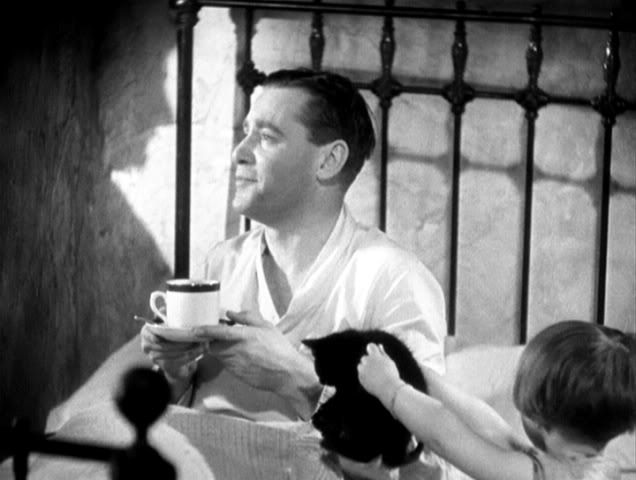
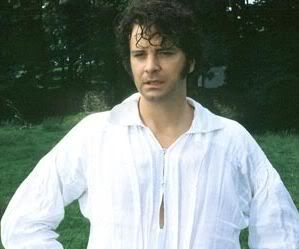
Speaking of madness, I purchased this still to go into my Boots and Shirtsleeves Screensaver folder, which is comprised of photos of actors in period dramas wearing white puffy shirts and/or riding boots. I also have a folder called Time for Tea with just pictures of my favorite actors drinking tea and another called Ungroomed which features pictures of my favorites unshaven and/or with messy hair. Sometimes, a photo will be a twofer, and feature someone with messy hair in shirtsleeves, or wearing riding boots drinking tea or unshaven and in shirtsleeves (as above). If I ever found a photo of one of my favorite actors drinking tea unshaven, with messy hair and in shirtsleeves and riding boots, I would probably have some kind of attack and have to be hospitalized.

Thursday, September 3, 2009

Eye Candy of the Day: The 39 Steps

Robert Donat and Madeleine Carrol are literally shackled together and shacking up in Alfred Hitchcock's adventure thriller the 39 Steps (1935). Richard Hannay (Donat) steps into a music hall to divert himself and before long finds himself hip deep in a spy ring, beautiful women, racy sleeping arrangements, and murder. The action begins with a pick-up: a mysterious woman in a veiled hat invites herself up to Hannay's apartment and winds up dead a few hours later. Hannay borrows her ploy of using sex to get what he wants and finds women mostly willing to go out of their way to help him. Hitchcock exposes a society ready always to believe the lascivious and vicious before the innocent truth. Of the three women Hannay ends up spending the night with he falls for the one he fights with (Madelaine Carrol) which is true to the spirit of the screwball comedies that were bubbling up in America.

There's an interesting and poignant interlude on the Scottish moors with a woman who is completely swept off her feet by the dashing mysterious stranger who has stumbled briefly into the miserable cottage she shares with an even more miserable husband. The film leaves her behind, but not before she gets the memorable chance to make a noble sacrifice for him and get a kiss from our hero. She's like the fleshed out version of the woman into whose hospital room Cary Grant passes through in North by Northwest. Speaking of which, The 39 Steps is remarkably similar to that later more famous Hitchcock film. Both movies use a man on the run from the police as an excuse for a cross country chase and a series of entertaining adventures as he dodges the law, deadly thugs and prevents a master spy from stealing important military secrets. The focus of North By Northwest is a sweeping, technicolor travelogue while The 39 Steps has a more intimate agenda. Unlike the larger than life characters that inhabit North By Northwest, the supporting cast in 39 Steps insinuate themselves quickly into the memory and seem like real people glimpsed in the midst of their daily lives. That moment in North by Northwest when Cary Grant is treated like the movie star he is by the woman in the hospital room, is funny because the audience is in on the joke of the whole stylized, over-refined universe. And a similar moment in The 39 Steps is completely uncynical and poignant because Hannay begins his flirtation with crofter's wife as part of a role he's playing and ends with his genuine concern for her welfare. His good-bye kiss is what is required of the part but you can see him conflicted about the game he's played.

In both movies, Hitchcock seems to enjoy torturing his heroes, putting them not only in constant peril, but continually uncomfortable, awkward and embarassing situations. They get hungry, tired and dirty along the way (though not quite as much as mortal men would) but they never seem to get lonely! If there's one thing you should learn from these movies its this: chicks dig fugitives.

Thursday, August 6, 2009

Gold Diggers of 1933 (1933, duh!)

Warren William sets aside his usual wolf character to play an honest, crusty upper crust type who rolls over and begs for show girl Joan Blondell.

One of the most astonishing things about having a blog is that I'm still finding movies all the time that amaze me. Enter, The Gold Diggers of 1933. Wow. What a picture. It's funny, sexy, the songs as catchy as a virus on an airplane and the choreography is something you really have to see to quite believe. To top it off, the closing number, Remember my Forgotten Man is socially relevant and still genuinely moving 76 years after it was recorded.

The reassuringly predictable plot follows the ups and downs of a group of showgirls who've been put out of work by the Great Depression. Joan Blondell, Aline MacMahon, Ruby Keeler and Ginger Rogers get cast in a Ned Spark's musical revue about the Depression"Forgotten Melody" which lacks only a bankroll to get off the ground. Miraculously fresh music, voice talent and a fat wad of cash are be found in a neighboring tenement apartment where "Boston blue blood" is masquerading as a starving composer (Dick Powell). After Powell makes his Broadway debut, the papers leak his identity and his brother (Warrren William) scoots down to Manhattan to cut off his income and try to block his engagement to showgirl, Polly Perkins (Ruby Keeler). He brings along the family lawyer Fanuel "Fanny" Peabody (Guy Kibbee) for moral support. The pair get side-tracked in the man trap that is the Polly's apartment, and after being pelted with lingerie for a few hours, they begin their own daliances with two of the three remaining "gold diggers." Farcical mix-ups, drunken misbehavior and more "fanny" jokes than I can possibly relate in one blog post ensue.

Warren William and Joan Blondell have some fun scenes that are far more about sex than romance. Even when he's playing a nice guy he comes off a bit as a bit of a wolf, though one that Blondell's Carol the "Cheap and Vulgar" showgirl is gaga over. William's comedy is made all the better by his method of playing everything entirely straight. In one scene he rants that he and Fanny have to stay in New York, because he's "this close" to figuring out what makes this Polly Perkins tick.

Powell and Keeler do the bulk of the singing and dancing but whenever Ginger Rogers is on screen, she is so completely head and shoulders above the other performers, that you wonder why director Mervyn LeRoy bother to feature Keeler to such a great degree. Keeler's singing and dancing aren't bad, but she's no Ginger. Sadly, Ginger's big number, "Sing You a Torch Song" got cut and is put in the film as a fairly weak performance by Powell at the Piano.

Now, I have a confession to make. I'd never actually watched a Busby Berkeley musical all the way through before . I had only seen clips of his human kaleidoscope numbers, which is like judging It Happened One Night from the hitchiking scene that always gets shown on TV. To think that until yesterday, I only thought of Busby Berkley in terms of his signature moves. He is so much more, a mad genius whose numbers move like stream of consciousness through one surreal sight gag to the next. Take Pettin in the Park, for example. The action begins with the principal couple and moves out to see a whole range of diverse couples from the very young to the very old, black, white, rich and poor enjoying love in the great outdoors. One couple have a baby in a baby carriage and as the camera zooms in we see that he is actually little person actor Billy Barty who jumps from the perambulator to wreak havoc on the set. It begins to rain on the couples and the women run behind a backlit scrim to change. Midway through Barty pulls the curtain up exposing them. Their new costume is a metallic body suit that acts as chastity belt much to the disappointment of the male dancers in the number. Luckily Barty provides Dick Powell with a can-opener at the end of the song. And that's just one minute in one song. Oh, to be Busby Berkeley and to be able to realize your every fever dream so completely on screen.

Bonus Eye Candy of the Day: Ginger Rogers in a money bikini!

We're in the Money is probably the best-known sequence from the movie. The film opens with this wonderfully ironic comment on the Great Depression. Just as Busby Berkeley's choreography starts to hit his stride with the surreal weirdness, in this case Ginger Rogers singing in pig latin, while the coin that covers her, um, bikini area rotates in time to the music, the Sheriff bursts in and shuts down the show due to bankruptcy.

There is something a little bit "Springtime for Hitler" about the play within the movie, "Forgotten Melody" and its difficult to tell whether Ned Sparks description of the penultimate number, in which he shouts, "The Wailing! The Wailing" is meant to be funny or serious. It's mindboggling to imagine the narrative structure of a play that could support both "Pettin in the Park" and the expressionistic masterpiece, "Remember my Forgotten Man" which features striking vignettes of women in poverty. One image of a woman holding a baby is eerily similar to Dorothea Lange's famous Migrant Mother taken in 1936. Of course, it's no more wonderful than a movie that's been as breathlessly silly as this one has up to this point that can suddenly switch gears and deliver the tone of dignity that "Remember my Forgotten Man" deserves.

Thursday, July 23, 2009

Eye Candy of Day: Four Frightened People

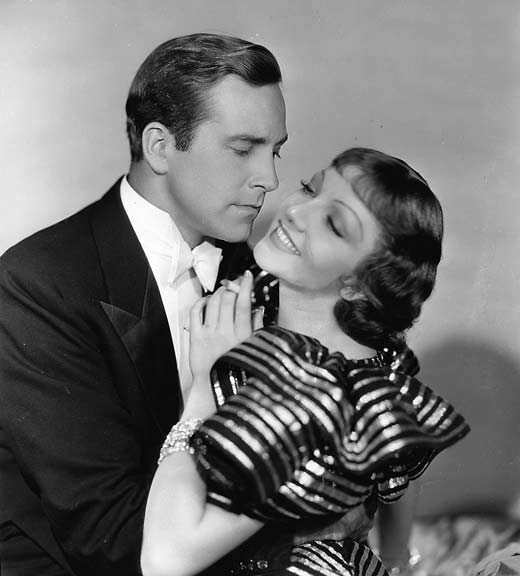
What is more awesome than Herbert Marshall and Claudette Colbert in a romantic comedy melodrama action adventure film? Herbert Marshall and Claudette Colbert wearing leopard skin in a romantic comedy melodrama action adventure film!

This campy Cecil B. DeMille spectacular was more than a little bit responsible for the enforcement of the Production Code. Claudette Colbert has an infamous nude scene that worked the censors into a frenzy. It's tame by today's standards of course, but hot stuff for 1934. Herbert Marshall is adorable in it too. "I didn't want you to get pneumonia." I'll bet!

Colbert plays a shy, bespectacled school teacher of whom it is said, "girls like her chaperone themselves. Right into the old maid's home." She is shipwrecked with Arnold Ainger (Herbert Marshall) a shy rubber chemist and Stewart Corder (William Gargan) an earthy American journalist, and Mrs. Fifi Mardick (Mary Boland) the obligatory aristocrat complete with lap dog. It doesn't take long before Colbert looses her glasses and goes native. What fun!

Thanks to Four Frightened People, I've gone bananas for Herbie this week and made a Herbert Marshall Picture Gallery as well as a Youtube Playlist. Enjoy!

Monday, July 20, 2009

One year anniversary, plus eye candy

"Dr. Venkman" and the Groundhog go for a little drive.

Hey, I just realized last week was my one-year anniversary! A whole year of blogging just about every movie I've watched.

Here's a movie I watched, with my son, Robert who is obsessed with Ghostbusters, so much that he now wants any movie with Bill Murray, or as he calls him "Dr. Venkhman." We saw this at Cinema Rex at the scifi Con which is a great place to see a movie like this: appreciative audience, comfy couch, and most importantly, free snacks.

Andie MacDowell didn't annoy me as much as she usually does, this time through. I used to shout, "thanks for ruining Groundhog Day" everytime I passed one of the Andie MacDowell "Got Milk?" billboards. Maybe I'm just lightening up in my old age.

I am still amazed that Bill Murray can say schlocky lines like "when you stand in the snow you look like angel" with complete sincerity and make me buy it. Though the best scene in the film is his "driving lesson" with Puxatony Phil, the love scenes in this sweet romantic comedy are both funny and romantic, often at the same time, which isn't always so easy.

There are some inspired short bits in the movie: the day that he shows up dressed like the Outlaw Josie Wales with a cigar and a sombrero. He gets in line to see the family movie "Heidi," saying "I've seen this film over a thousand times." In another scene he goes to visit the town psychiatrist who looks like he's about 25 years old, just out of college. He is clearly in over his head with Bill Murray's rather large psychiatric problem, especially after a few minutes when his new patient starts punching himself in the face with a pillow.

I wondered just how many days Phil Connors has to repeat in the movie. Screenwriter Harold Ramis said he had in mind that he was stuck in that one day for ten years. The premise is a useful way to look at the way we repeatedly fail in the same way in life. Connors makes the same mistakes with women, in this case the same woman. He is always working an angle, saying what they want to hear and trying to appear more than he is. He also treats people generally like crap. Over the course of the movie, he undergoes a Scrooge type transformation from malevolent egoist to obsessive do-gooder. Murray is great at making both incarnations of his character believable and funny. The big change is that he works on himself. He reads more, picks up hobbies, and in doing so he quits trying to impress Andie MacDowell so much. This is actually pretty good advice for anyone looking for love. The minute you stop trying so hard and focus on finding what it is you love to do, the right person usually comes to you.

Tuesday, June 9, 2009

Eye Candy of the Day: Oh Mr. Manners

One thing I love about writing this blog is that it encourages me to watch all kinds of old movies and to "discover" all kinds of actors and post gratuitous numbers of photos of them. It's a poorly kept secret that I wish I was the editor of one of those old movie magazines from the thirties.

David Manners was born Rauf Acklom in Nova Scotia, Canada in 1900. He came to Hollywood in 1930. He signed with First National & Vitaphone before it became part of the Warner empire. He was lucky in that his first film was a decent sized part working with the great James Whale on the war movie Journey's End. He pitched hay and woo to Ruth Chatterton in The Right to Love, fell under Myrna Loy's vampish spell in The Truth about Youth and wore a turban with Loretta Young in Kismet (1930).

He got his big break as Johnathan Harker in Tod Browning's classic production of Dracula, starring Bela Legosi. It's interesting that he got his start with James Whale and yet never acted in one of Whale's horror movies, but went on to do his best known work in the genre. The Mummy and, The Black Cat, and The Death Kiss soon followed, building on Manners' popularity as a leading man.

Outside of horror movies, Manners was sought after to play the "palpitating playboy" (Gosh I wish I'd come up with that phrase!) in Beauty and the Boss and Three Broadway Girls (AKA The Greeks Had A Word for It) and Torch Singer (1933). He played a character with the unfortunate name, Dick Cheney in The Ruling Voice (1931)

Manners had memorable parts in two great pre-code womens' films, Man Wanted and The Miracle Woman. It was in Man Wanted that I first noticed Manners and like Kay Francis, could really appreciate his qualities as a secretary. Manners plays a blind song-writer who falls for a fake faith healer in The Miracle Woman. One of the more interesting aspects of this part is that his character relays most of his emotions via a ventriloquist dummy. Manners manages, amazingly, to make this less creepy than it sounds.

He sported a southern accent in the civil war drama, Hearts in Bondage in 1936, his last year in Hollywood. David Manners, in looks so much like an early 1990s Ralph Fiennes in personality more like a late 90s Brendan Fraser. Perhaps if Manners had been able to play the kind of challenging and provocative roles that Ralph has made a career of, he might have stuck with acting in Hollywood. Instead, he retired as his popularity was waning only slightly and took up novel writing among other things. His last film was playing second lead to another recent obsession of mine, Herbert Marshall alongside Katharine Hepburn in a Woman Rebels. I guess playing second lead in a "Box office Poison" era Hepburn film wasn't enough to tempt him away from retirement. He had played opposite Hepburn as her romantic interest in her first film, A Bill of Divorcement.

Manner's returned to acting on the stage in the late forties and fifties in Oscar Wilde's Lady Windemere's Fan and The Importance of Being Earnest. Manners continued to write and after publishing two novels, he also wrote a pair of self-help books published in the seventies and eighties. He died in 1998 in Santa Barbara, California. I've started a small David Manners Gallery. I'd be happy for any additions.

Saturday, April 11, 2009

Eye Candy of the Day: A Brian Aherne Gallery

Brian Aherne surrounded by adoring nurses during a World War II USO tour.

I started this blog, in part, because I always had a fantasy of producing a modern version of the fairly trashy movie magazines that were popular during the golden age of Hollywood. If I had such a power, I would print lots of lovely pictures of all my favorite actors and actresses and of course give all my favorite obscure English actors the spotlight they deserve. I would probably devote an entire issue,or at least a cover to the under-rated Brian Aherne. I first noticed Aherne in Sylvia Scarlett (1935) playing the floppy-haired bohemian artist rival to Cary Grant's "bad, handsome" cockney piano man. It's the rare actor that can turn my head away from Cary for even a moment. Though Aherne's character is kind of a jerk in the movie, I've always gotten what it is that Katharine Hepburn's character sees in him.

Brian Aherne was a British theatrical star who had been on stage since he was eight years old. Like many of his fellow thespians he was recruited to Hollywood when the movies got sound. Women ruled at the box office in those days and Aherne was fortunate enough to play second fiddle to some of the best. His first talkie was made at Paramount as Marlene Dietrich arm candy in Song of Songs (1933). One of his first films was the British version of The Constant Nymph (1934), which was later remade in 1943 starring Ahern's then-wife, Joan Fontaine. Another standout part for Aherne was the male lead to Helen Hayes in What Every Woman Knows (1934) where he plays a thickly-accented Scottish politician at the turn of the century. That same year he starred opposite Ann Harding in the World War I picture The Fountain. He also played the male lead in the Joan Crawford vehicle, I Live My Life (1935). He played the sympathetic Irish rebel, Dennis O'Riordan, in Beloved Enemy (1936) with Merle Oberon and David Niven.

Aherne got his first starring role in 1937 in Jame Whale's The Great Garrick, a biopic about the great 18th Century actor, David Garrick. Though the movie was a critical success it was expensive, especially for a Warner's picture and it flopped. Aherne's comic abilities got further airing with Constance Bennett in the My Man Godfrey knock-off, Merrily We Live (1938). Ahern eplays a rehabilitated tramp who becomes the family chauffeur. Screwball antics ensue. In 1939, Aherne starred in Captain Fury, his most commercially successful movie, about another Irish rebel who escapes from an Australian prison. That same year he earned his only Oscar nomination in a hilariously-bearded supporting role in the Paul Muni biopic Juarez. He played a self-made man who spoils his child in My Son, My Son (1940) and made the first of three comedies with Rosalind Russel, Hired Wife and My Sister Eileen and What a Woman.

He co starred in a courtroom drama with Rita Hayworth, The Woman in Question (1940) . He starred in The Man who Lost Himself (1941) and the musical remake of Smilin' Through where he listened contemplatively to songbird, Jeanette McDonald. He made a romantic comedy with Lorraine Day, A Night to Remember and a pair of war movies Forever and A Day and First Comes Courage. After that he took some time off from film and returned in the later forties as a supporting player. One later Aherne role that comes to mind is the teen pregnancy drama Susan Slade (1961) in which his wife is played by Natalie Schafer, best known as Mrs. Thirston "Lovey" Howell the Third on "Gilligan's Island."

After retiring from Hollywood, Aherne tried his hand at writing, composing a casual biography of George Saunders called "Dreadful Man" and his own autobiography "Proper Job." He was married to actress Joan Fontaine, from 1939-1945. He met Fontaine because he had first dated her sister, Olivia De Haviland, while filming their movie, The Great Garrick. He later married Eleanor de Liagre Labrot, the sister of celebrated broadway producer Alfred de Liagre, Jr. The couple were married until his death in 1986.

Enjoy more pictures of Brian in my gallery.

Monday, April 6, 2009

Eye Candy of the Day: A Free Soul

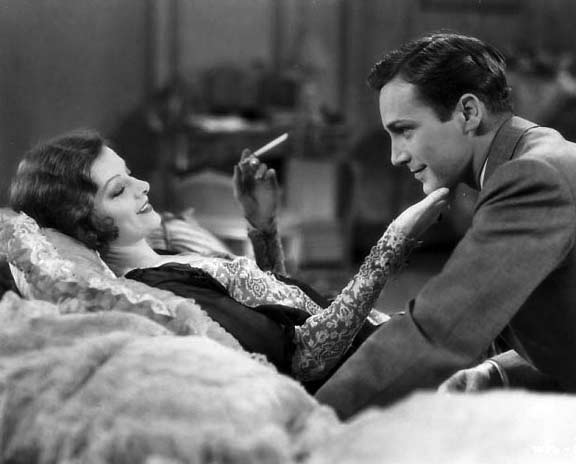
I've posted a lot of gorgeous eye candy since I started this blog, but I have to say this may be one of the prettiest. Not only did Doctor macro come through with a still of Gable and Shearer together (many of the publicity images for the film understandably feature its stars Leslie Howard and Norma Shearer), but I wanted to talk about the smokin' hot "dress" that she wears in this scene. Also, I love the way the scene is lit so that her hair has that halo effect. Every time I watch a Norma Shearer movie I have the sudden urge to get a perm. It must be the lighting!

I was pleasantly surprised with the quality of A Free Soul, especially in comparison to The Divorcee which was made just a year earlier. A Free Soul is better written, her character far more daring and interesting, the acting vastly better, and the production values are miles ahead. This feels almost like a mid-thirties film. The sound if not great, is at least fully audible, and the flow and the pace of the film are much more like a talkie than a silent.

I've said before that Norma Shearer is an actress who is really only good when she is acting with other people of her level of talent. Many great actors will make bad material and weak co-stars better, but Shearer wasn't able to do that. Here, thankfully, she clicks with everyone on screen . Luckily everyone in the movie (Gable, Leslie Howard, Lionel Barrymore and James Gleason) are also excellent. Her co-stars are so good that it would be tempting to say that they carry her, but that is not the case. Lionel Barrymore won an Oscar for his performance as her alcoholic father and that award came mainly for a long monologue he delivers in a courtroom. It is very over the top, but Barrymore doesn't go too far. A big scene like that is risky in that if it fails it will be as memorably bad as it is good. Barrymore nails it and he deserves his accolades. But Norma Shearer is in the scene too, holding her own.

Clark Gable is probably the most interesting thing in the film. It was clear that he was going to be a star and he and Shearer have an incandescent chemistry. The infamous scene where he shoves Shearer back onto the sofa, plays as fairly tame today. His character is reasonably sympathetic most of the way through and in many ways this film marks a turning point in attitudes toward "antiheroes." The New York Times review in 1931 said that it was absurd that a woman like Shearer would be romantically interest in Gable's character. Now it seems absurd that Leslie Howard would have a shot at all.

Thursday, March 19, 2009

Eye Candy of the Day: Cary Grant and Randolph Scott

Is there really no such thing as bad publicity? In the 1930s Cary Grant and Randolph Scott posed for a series of photos that highlighted their domestic lives together as room mates. In one picture Grant is wearing an apron in another they sit close together on a diving board. In the most suggestive of the photos, they are shown in silhouette with the ocean in the background. Scott reaches over to light his cigarette from Grant's. I'm sure that the intention of the publicity campaign was to show how Hollywood stars are just regular people who do normal every day things and to show the camaraderie between their contract players. Over the years the photos have popped up repeatedly usually as evidence of a gay relationship between Grant and Scott. I'm not sure whether the photos actually started the rumors that Grant and Scott were lovers but it's safe to say that they've done nothing to quash them. A book came out last year that maintained that the studio publicity machine actually deliberately created that subtext in order to give the actors a gloss of free-living bohemianism.

My reason for posting this is not to drag up the controversy again since I feel like it's been done to death. I just happened upon this picture and it reminded me that many of the pictures in this infamous photo shoot are among my favorites of Grant. Many of the pictures have an absurd quality such as the one where they are tossing a giant medicine ball around and those who can tear their eyes away from the beefacke long enough will note that Grant is wearing white bobby socks on the beach. I put one of the photos in my book, not only because I felt like it needed to be addressed in as honest a manner as I could, but because I couldn't imagine a compendium of pictures of Grant's life that didn't include some of those photos. They are part of his image, good, bad or indifferent.

Grant spent a fare amount of time in the last twenty years of his life denying as politely as possible, rumors that he was gay or bisexual and Scott's family have come forward also to deny them as recently as last year. Books on Hollywood continue to state Grant's bisexuality with point-blank authority when his more thorough biographers are convinced that at most it is still an open question but more likely to be a case of guilt by association. The fact that these pictures were printed as recently as last year in a major English newspaper makes me think that that more than twenty years of after his death, Grant is still making news, and that there really is no such thing as bad publicity.

Monday, February 23, 2009

Eye Candy of the Day: The Curious Case of Mr. Chips

With the Curious Case of Benjamin Button walking away with the Best Special Effects Oscar last night, I thought it was time to dig out Goodbye Mr. Chips (1939) as another example of a movie where a man goes from old to young and then slowly back to very old in the space of two hours. The make-up in this movie was excellent. It wasn't until a half an hour in that I realized the actor playing Chips was the very dashing Robert Donat (The Thirty-nine Steps). He appears briefly as a young man, clean shaven, much as you see him above. Though by the time he catches up with Greer Garson, he is middle aged and wearing a shaggy unkempt mustache and some fairly convincing lines around his eyes. He spends about 75% of the movie as an old man and Donat's characterization of the spry, springy Chips is really convincing. Donat deservedly won the best actor award for his emotional transformation from a shy, tired man, always on the edge of the action to an energetic force for good. Chips' revolution is one of tea and cake and good humor, but those things were sorely lacking in his environment and they make a difference.

I have avoided this movie because it is spectacularly maudlin but I tend to forget that at its heart beats a really sweet love story. Garson and Donat are lovely together. Mr Chips meets his wife while hiking in the mountains in Switzerland. They are trapped together in a fog and the altitude allows the shy, overly-Victorian Chips to actually put the moves on her. Garson's character is very modern, a fact which the movie eases into place by labeling her a revolutionary. One of the truly delightful scenes in the movie has Chips introducing her to his stuffy colleagues at Brookfield school. Expecting a much older woman, they fall over themselves trying to impress her. It's nice to see poor Chipsy get some respect after always being the good sport in the movie.

It doesn't last long, though and the movie morphs into a wartime tale of an elderly man being useful in a time of crisis. Of course this is to be expected given the year the movie was made, but the film has a very dark take on the theme as boys who are one day in boaters and short pants are the next being referred to in a roll call of WWI dead. I was reminded of my visit to Cary Grant's school in Bristol and how there is plaque there filled with the names of dozens of former students killed in action who were just a few years older than Archie Leach.

Tuesday, February 17, 2009

Eye Candy Generator: Olivier and Leigh

I love Laurence Olivier and Vivian Leigh so it was an extra big treat treat to find a huge cache of high-rez photos of them on the Life Magazine website. This is stage performance of Anthony and Cleopatra. Ya gotta love the giant pharoh's head set piece in the background. This must have been a matinee blockbuster of a play. So many of time machine fantasies involve going back and watching plays, it's not even funny.

Life Magazine has their entire photo archive online in high resolution for free. If you have any interest in old movie stars at all you will probably spend hours as I did, coming through thousands of unpublished photographs drooling like mad.

A couple of other pieces of housekeeping:

My podcast roster continues to grow. I have just recently found the awesomely funny Bugle podcast which reminds me of a combination of Monty Python, the Daily Show and the old Firesign Theater show, Nick Danger. Comparatively less funny, but perhaps of interest since it's is movie-related, Doug Benson: I Love Movies.

The Misdaventures of Margaret is on Youtube. Now you can see the misguided remake of the Awful Truth without wasting a Netflix rental on it.

Friday, January 16, 2009

Eye Candy of the Day: Long live the articles of Piratization!

The articles of Piratization are as follows:

1) All men shall make equal share of the treasure. Any man caught hording more than his rightful share will be banished from the crew. Those injured in battle shall receive additional compensation for their injuries. Loss of a right arm=500 dubloons. Loss of a left arm=300, Loss of a right leg=400, loss of a left leg=200, loss of an eye=300.

2) No man shall do harm to another on this crew or any other person under the protection of these articles. Those caught in harming another will be banished from the crew.

3) No man shall hold a woman against her will. Any man caught doing so will be banished from this crew.

4) No ship on the seas is safe from plunder, but those under the protection of these articles. We mean to take treasure from every ship we encounter, but will use no more force than is necessary to subdue them. Any man caught using undue force will be banished from this crew.

Those in favor, say aye! Long live the articles of piratization!

Wednesday, December 3, 2008

Eye Candy of the Day: Picard and the Doctor

In the midst of post-Hamlet decompression, but I thought I'd clean house again and toss this beauty of a photo out there. It's David Tennant (yes, Doctor #10 from Doctor Who) and Patrick Stewart (Captain Picard) from the current London Stage Production of Hamlet.

I would give one of my teeth (maybe a lesser molar) to see this play.

I'm also now obsessed with finding a copy of the Asta Nielsen Hamlet (1920) translated into English. If anyone knows how to get it, please let me know.

Tuesday, November 18, 2008

Eye Candy of the Day: Destry Rides Again

Stewart and Dietrich in Destry Rides Again (1939). the pair were rumored to have had an affair during the making of this unforgettable Western. Image from Simply Classics.

Destry is a lively, well-acted western that is probably best remembered for the big cat fight scene between Dietrich and Una Merkel. Dietrich and Stewart have amazing chemistry together and one or two trashy Hollywood biographies have them hooking up for a doomed love affair that supposedly left Dietrich pregnant and heartbroken. Whatever the case, the film benefits from the sparks that fly whenever they are on screen.

Dietrich I've always felt was under-rated as actress because she has been so terribly over-rated as a style icon. Just because her looks foretold menswear-inspired fashion, Madonna, punk and post-punk doesn't mean she couldn't throw down when she needed to. Destry is one of her best performances: she sings, she cracks jokes, she kicks ass and she breaks hearts.

Jimmy Stewart has many great performances to his credit, but Destry has always been up there with Philly Story and Mr. Smith in my book. He plays a Sheriff in a crooked town who manages to clean up the stereotypical mob of bad guys mostly without guns. Stewart goes through the movie, with a bemused, laconic attitude. It's almost as if Dietrich's famously ironic tone wore off on him and he added it to his all-american bag of tricks.

Where would Courtney Love be without Destry Rides Again?

Director George Marshall made a lot of westerns, (including the 1955 remake called Destry) but Destry Rides Again doesn't feel like a typical turn in the genre. First of all, the solution to the town of Bottleneck's problems is that all the women band together to fight beside their men. Westerns are usually about the individual, they almost always champion a lone wolf who rides into town and vanguishes the bad guys only to disappear again. Destry is really the oppoosite of that. There is a bit of High Noon here, without the preachiness--the idea that people are collectively resposible for law and order and that evil can only thrive in an atmosphere of fear that Destry manages to mostly dispel with cleverness and humor. My big beef with Destry is the ending of course. It bugs me every time I watch it because Tom seems to forget Frenchy almost immediately. Other than the ending, I'd say it's a darn near perfect movie, so entertaining that for years I labored under the delusion that Howard hawks directed it.

Thursday, November 13, 2008

Eye Candy of the Day: Strangers on a Train

Farley Granger and Kasey Rogers in Strangers on a Train (1951).

I didn't appreciate until yesterday, just how visually arresting this Hitchcock film is. From the murder reflected in the victim's pair broken glasses to the noirish gleam given to our nation's capitol, this is one Hitchock's most beautifully made movies. The story of an ambitious young man with political aspirations and dreams of the golden girl who is inconveniently tied to a woman he wants to be rid of, is reminiscent of A Place in the Sun which came out the same year. Ruth Roman who plays Granger's love interest even reminds me a bit of Elizabeth Taylor. While A Place in the Sun has all around superior performances from the actors, and probably a better script, Strangers on a Train is one of Hitchock's most concentrated and successful efforts at building an atmosphere of suspense. In one scene a lone figure standing on the steps of the Lincoln memorial in stark broad daylight is reminiscent of the dreamscapes from Spellbound. We see the figure from Granger's perspective, never knowing whether or not the figure is psychopath Bruno Anthony (Robert Walker).

Walker's performance is chilling in its intensity. The young actor was briefly hospitalized for a nervous breakdown before making the movie and committed suicide shortly after production finished while working on the feircly paranoid anti-communist polemic, My Son John (1952). The context of the Red Scare is part of the tense feelings in Strangers as well. Though it is a-political, the movie is set in Washington and the protagonist is a young man working in the office of a prominent Senator. The fear of scandal hangs over most of his decisions and prolong his troubles. In another scene he sits in a dark suit in a crowd full of tennis fans clad in white. As we watch their heads moving mechanically left to right with the match, Walker looks straight into the camera which moves quickly in on his face. It's one of those terrifying forward camera moves that Hitchcock would use most famously in Psycho (1960) and Vertigo (1958), but perfected in Strangers on a Train.

Wednesday, October 1, 2008

Eye Candy of the Day: The Late Great Paul Newman

Back on the Chain Gang: Newman in Cool Hand Luke.

Let's take a moment to reflect on Paul Newman. He was a great actor. He hadn't always been a a great actor, he made it through a great deal of his career as a good actor who looked, well, see for yourself. In the late 1970s he began to do something that's nearly impossible for Hollywood leading man to do. He started to age gracefully. He took difficult parts in movies about men growing old and feeling used up. For those of us too young to remember Newman of the late 50s and 60s, he was always just that old drunk from the Verdict or that old pool shark in The Color of Money.

I remember when he beat Harrison Ford (among others) for the Oscar in 1987. He was winning for Color of Money, probably not his best performance, but it was a catch-up Oscar. "Oops we haven't given Brick Pollitt, Cool Hand Luke, Butch Cassidy, or Reg Dunlop an Oscar yet." I really wanted Harrison Ford, my favorite actor at the time, to win for Witness. I ran to my kitchen, grabbed a bottle of Newman's Own Italian dressing out of the door and shook it till I felt better. I guess hadn't really learned to appreciate the awesomeness of Paul Newman yet.

The next year I watched Cool Hand Luke (1967) and it changed my mind about the actor . If ever there was a movie tailor made to cater to the interests of a dorky 17 year old girl, it was Cool Hand Luke. It has authority or "authorit-tie" being disrespected, unrelenting, soul-crushing random punishment that might as well be high school and one really cute boy who just can't keep his shirt on. I think my favorite thing about Luke is that he eats 50 eggs on a bet. I can relate to that self-destructive kind of need for attention. I do, afterall, keep a blog. He just wants credit for his egg eating ability, so he continues, despite Dragline's (George Kennedy) warnings of doom.

Cool Hand Luke had as much appeal for the wannabe rebel of the late eighties as it did for the disaffected youth in the late Sixties. Toward the end of the movie Newman has a somewhat contrived, though beautifully acted scene in which he questions God, "You made me what I am. How am I supposed to fit in?" No matter how many times they put Luke in the box, he just kept coming back at them, with his banjo, his escape attempts and his real purpose, which is seemingly to unmask authority. In the final case, the mask is a literal one, the cold souless, reflective aviator sunglasses that the bosses henchmen wear while beating the prisoners into submission. The filmmakers made some attempt to turn Luke into a Christ figure, even filming Newman from above sprawled out in a crucifixion pose.

Paul Newman had other great roles, of course. I'm even kinda partial to his final role as Doc Hudson in Cars. And I bet I could eat 50 of those Newman's Own Fig Newmans.

Monday, September 15, 2008

Eye Candy of the Day: Warren William

Warren William with Billie Dove in an as-yet unnamed film.
I first heard about Warren William from one of my regular readers, kda, and then read about him in Mick LaSalle's "Dangerous Men." Those two recommendations alone were enough to sign me up for his fan club, the only trouble was I hadn't actually seen any of the man's films. Well TCM this month has decided to be complete pre-code awesomeness and I finally got my Warren William movie, in the form of The Dark Horse. I was not disappointed.

William plays Hal Blake, a smooth political operator who is called in by a desperate party to get a patsy dark horse candidate, literally named "Hicks," elected governor. William was known as the poor-man's John Barrymore (perhaps, they should have said, Warner's John Barrymore, as it amounted to much the same thing) because of his likeness of profile. I think that's a really shallow assessment though, given what I've seen of Barrymore's acting. I can't see Barrymore touching this deviously cynical character whose chief troubles revolve trying to get his current girlfriend (Bette Davis) to help him with his alimony payments. Not exactly the type of noble character Barrymore would play. Warren also has a zany energy that is nothing like John Barrymore. If anything it recalls Cary Grant in His Girl Friday. In fact, I might go so far as to say that Grant's Walter Burns is almost an homage to the sort of slimy, yet charming characters that William played in his pre-code films.

Paired with smart and capable actresses, Bette Davis , and Vivianne Osborne as his backstabbing ex-wife, Warren William throws ethics both professional and romantic to the wind and the audience is completely prepared to still accept him as a hero. It goes to show that Grant could never have gotten away with playing Walter Burns the way he did if Rosalind Russel had been one bit less his equal. Bette Davis is not quite up to Roz Russell level of gal Friday perfection, but she certainly oozes intelligence and competence though she may be a bit stiff at times. Osborn fairs better as a woman who is every bit as unethical as her ex-husband, but lacking in his redeeming romanticism.

The Dark Horse is a perfect introduction to this actor, as it's timely, smart and funny. Looking beyond William's shellaced hair and pencil thin mustache, concessions to the Barrymore look, I'm sure, William reminds me of Liam Neeson of all people. An early scene in The Dark Horse reminded me so much of Neeson in Michael Collin's rousing the prisoner's to the cause of the Irish Independence that I was distracted for the first ten minutes of the film. Of course, Hal Blake knows nothing about the man he's praising in such grand terms, and is the first, but not the last instance of grand theatrics used to sell politics. This satire feels as fresh as the day it was made. The key points about the electorate needing to feel that the candidate is as stupid as they are certainly hit home in an election season where a Wellesley College graduate drank bourbon and talked NASCAR and a vice presidential candidate's chief qualifications have to do with the ability to shoot something besides her hunting companions.

Friday, September 5, 2008

Eye Candy of the Day: A Tribute to Stewart Granger's legs

Vivian Leigh checks out Granger's legs in Caesar and Cleopatra.

Some actors have memorable voices, soul-piercing eyes or unforgettable dimples. Some never miss an opportunity to take off their shirt, roll up their sleeves, unbutton their collar or some other shameless trick to show off their torso.

Stewart Granger looked really good without pants. It's not every actor who can appear in tights on not look silly. Olivier could manage it. He had the gravitas and nice legs. For my money, no one really can touch Stewart Granger for excellence sans pantalons. From his first pants-less role as Apollodorus in Caesar and Cleopatra (1945) to the David Lee Roth tights in Scaramouch (1952) to the thigh high boots he wore in Young Bess (1953) and Prisoner of Zenda (1952) his legs were out there on display, walking away with all the glory.

Thursday, August 28, 2008

Eye Candy of the Day: Clark Do-over

Well, I was being slightly cheeky by posting the most unattractive picture ever of Clark Gable yesterday. So for all you Gable fans out there, here's a proper one for you. I love this scene in It Happened One Night (1934), my favorite Gable movie. I'm not certain, but I think this is "day for night" photography, but it gives everything an ethereal moonlit glow.

The thing I love about this movie is the combination of the heavily romantic atmosphere and the world-weary cynicism of Gable's Peter Warne who is pre-occupied with the idea that he never "be taken for a buggy ride" or played for a fool. His time with the runaway heiress, Ellie Andrews (Claudette Colbert), shows him that toughness is causing him to miss out on life and that what he really wants is a girl who jump in the surf and love it is as much as he does. The balance between the romance and the comedy is just perfect and sets the formula for the entire genre. It also has a stellar supporting cast including Walter Connolly as Ellen crotchety but lovable dad and Roscoe Karns as Shapely, the slimy traveling salesman who starts every conversation with "Shapeley's the name and that's the way I like 'em!"

It Happened One Night marked a real transition for Gable away from tough-guy who slaps women around type roles to more humane characters and it also proved that he could do comedy. The movie cleaned up at the Oscars and allowed Columbia Pictures to go from a small-time "B-movie" studio to join the ranks of Paramount and MGM.

Wednesday, August 27, 2008

Eye Candy of the Day: Precode Clark

Mick LaSalle in his book Dangerous Men, captioned this photo "Clark Gable suffering a rare attack of innocuous- ness, circa 1931." In this photo Gable was exhibiting the qualities that were considered appealing in a leading man in the twenties: a big grin, a sort of slumping deference and jaunty elegance. It's hard to believe that he played the screen dominating villain, Nick the Chauffer in Night Nurse, the very same year he took this picture. Luckily for film history Gable fits so poorly into the affable hero mold and he didn't quite take off as a villain either. He was forced to put his screen presence to good use making a hybrid of these two types: the lovable rogue.

I've added three new items, to the media room: Dangerous Men, Ten Cents a Dance and Ever in My Heart.