Showing posts with label David Manners. Show all posts

Wednesday, February 10, 2010

Surprise! Another gratuitous pic spam!

Kate Gabriel at Silents and Talkies came up with this meme. Who are your most swoon worthy actors? Who will you watch in anything, just to see them? Though I've probably pummeled you with this information subliminally for the last 18 months, I thought I'd spell it out, just in case someone wasn't paying attention. But really this is just a great excuse for me to spend hours trolling through my hard drive to find favorite pictures that I haven't posted yet.


Cary Grant: Duh, my obsession with him is so long standing I've been known at work as the Cary Grant Girl for years. Favorite Film: Bringing Up Baby. Movie that made me an obsessed fanatic, versus a casual admirer: weirdly, it was Monkey Business, which was the only Cary video tape I owned in college. It was a desert island thing. You had to be there.


Gary Cooper: At first I kept my Cooper obsession to myself. Would my Cary Grant fandom friends understand that there was room in my heart for "GC" as well as "CG?" Turns out there were a whole bunch of us crowded into that particular closet. Favorite film: Ball of Fire, also the movie that made me lurve him. I must have watched half a dozen Cooper films before this movie changed my mind forever.


Laurence Olivier: Only classic actor obsession that predates Cary Grant. I taped speeches from Wuthering Heights when I was 15 and played them on my walkman. I love Olivier's Matinee idol period, and mostly avoid movies from the 60s and 70s were he tended to work for anyone with the greenback dollars. Still I've watched enough of those. Favorite Film: Wuthering Heights, and That Hamilton Woman. Honarable mention: Divorce of Lady X.


Michael Redgrave: If I had an Essentials list, I'd have to include The Lady Vanishes and The Importance of Being Earnest. I probably said all I had to say about how swoony he is in my Thunder Rock post.


Gregory Peck: First actor obsession to come out of this blog. The movie was Spellbound. I'd probably seen it more than ten times before I got all goopy about Greg. Weird, huh? Favorite Film: Roman Holiday


Herbert Marshall: so there I was watching Riptide and I just couldn't believe that anyone even cared anything about Norma Shearer when she was playing opposite this totally awesome Brit who was understated and had such a dry, detached delivery made every line seem as if it were a gem descended from the gods or at least Noel Coward. He was elevating the shit out of his material, yo. Favorite film: The Good Fairy.


Robert Donat: Goodbye Mr. Chips? Goodbye my heart, more like. This guy is so awesome and he only made 20 movies. So why, why can't I see all of them right now. Favorite film: The Thirty Nine Steps. After that, I honestly can't decide: it's a five way tie between Mr. Chips, The Ghost Goes West, The Count of Monte Cristo, The Winslow Boy, and Knight without Armor.


Jeremy Northam: See the best actor you've never heard of. Swoon. Favorite Film: Emma.

Brian Aherne: The first time I saw him in a film, Sylvia Scarlett, I made a note to myself to watch more of his movies. And then it occurred to me while putting together youtube playlists for myself, that years had gone by and the opportunity to see more Brian Aherne movies just never came up. What the? So I went on a mission. I scanned my sources carefully, and managed to collect a tiny handful of his films. I bought his autobiography and read it. I've been collecting photos and putting together an online gallery. Favorite Film: Merrily we Live.


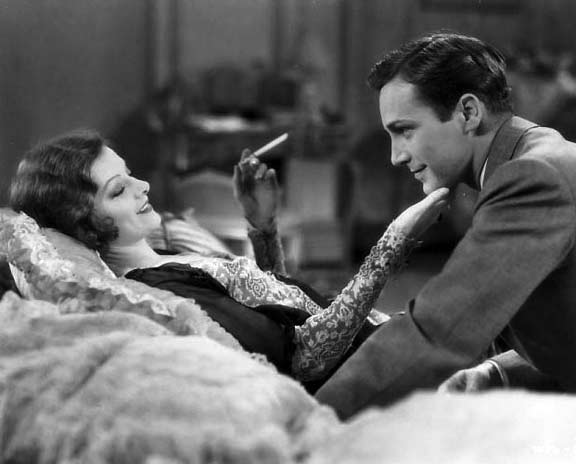
David Manners: David Manners got me to watch horror movies in earnest for the first time in my life. He helped get me over a life-long fear of ventriloquist dummies with his character in The Miracle Woman. And in the above picture he proves that one can wear jodhpurs and not look like a silent film director. He really is quite an actor. Favorite Film: Man Wanted.


Colin Firth: I've been holding forth on Firth a lot lately. It's my campaign to bring him Oscar buzz. Oh yeah, he's a cinch now. Favorite Film: Pride and Prejudice.


Warren William: The funny thing about Warren William is that I don't usually like cads or men with mustaches and William has both cadishness and mustaches in spades in most of his screen roles. (Above pic is from one of his rare clean shaven roles, Cleopatra (1934). Favorite film: The Dark Horse and Golddiggers of 1933.


Liam Neeson: I may have been the only person ever to sit through a preview of Schindler's List and say aloud in the theater, "hey, it's the guy from Satisfaction!" I look for this actor so frequently in programming searches on my Tivo, that the machine knows what I'm looking for after typing the letters, "L" and "I". As proof that I'll watch any thing with him in it, here's a sampling from Tivo in the last year: Suspect (Neeson has 5 minutes as a homeless murder suspect in this Cher, Dennis Quaid drama), Next of Kin (Neeson has 10 minutes as a hillbilly murder suspect in this awful Patrick Swayze movie), Gangs of New York (Neeson wanders through this violent mess of a movie for about 10 minutes). The above still is from one of my favorite Tivo finds of the last few years, Seraphim Falls which not only features Liam Neeson in a fur coat, it co-stars Pierce Brosnan, another of my 1980s obsessions. Favorite film: Michael Collins.

Some who didn't quite make the cut: George Sanders, Joel McCrea, Ronald Colman, Ricardo Cortez, Paul Henreid and Rossano Brazzi. All these actors I either haven't seen enough of their films to quite qualify them or I'm mainly interested in certain periods of their work, such as Pre-Code Joel McCrea for example.

Saturday, October 24, 2009

The Mummy 1932

The Mummy (1932) has a lot of similarities to Dracula (1931): same producer (Carl Laemmle), same actor (David Manners) plays a hero caught in a love triangle with a monster and D.P. Karl Freund was upgraded to director. Freund's film seems tighter than Dracula and the script corrects many of the problems that I had with the earlier movie. For one thing, the Mummy is a straight-forward love story and that makes it a simpler and more enjoyable movie. Boris Karloff's Imhotep is a lover from Ancient Egypt who is buried alive for the crime of trying to raise his girlfriend from the dead. He is scary to look at in his make-up and his transformation from inanimate corpse to stiffly moving mummy is one of the best effects sequences of the decade, but he's also sympathetic. He assists a team of British tomb hunters in locating his girlfriend's grave so that he can have her close to him, even if it as a corpse in the museum. People sometimes die of fright when he reveals his undead status, but that's not really his fault. He only becomes a bad guy when he discovers that his love has been reincarnated in the body of Helen Grosvenor (Zita Johann) and that she is involved with the very same Egyptologist who uncovered her tomb. He is motivated by jealousy and a sense that after all he's been through, he has some happiness coming to him. We can completely empathize with that and yet we can also see why even though Imhotep has a mystical connection to Helen, she prefers the company of a guy who doesn't look like he's 3700 years old. (Well, to be fair to Karloff, he doesn't look a day over 900.) After Frank (Manners) tells Helen how he fell in love with a mummified corpse she goes ahead and starts making out with him even though they've only known each other about five minutes. What girl could resist a line like that?

One of my problems with Dracula was not caring so much for the damsel in distress. Zita Johann fares far-better. She seems to be purpose-built to be a horror movie heroine. With her slight body, pale face and enormous eyes, she looks like she stepped out of an Edward Gorey illustration. She also really works her skimpy Egyptian inspired costumes and outrageous head dresses. I confess that half of my delight in this film was the art deco take on Egyptian clothes and furnishings.

The flashback to Ancient Egypt is one of the most famous sequences in the movie. Freund has Imhotep able to spy on his lover and his enemies by means of a pool in his apartment, that functions a bit like a crystal ball. Each frame is edged the same as the distinctive shape of the pool. At one point he shows Helen her past life in his magic pool TV, which somewhat comically, doesn't have sound. Freund even uses some of the conventions of silent film to convey an older time in filming this sequence. We are reminded that the discovery of the mummy Tutankhamen was only a decade earlier and perhaps that is why ancient Egypt and silent film seem to go so well together.

The Mummy is spooky, particularly when we are focused in on Karloff's eyes. Freund uses the lighting set up that was so effective in Dracula but wisely uses a much tighter framing, so that Karloff's evil, pain-filled stare fills the entire screen. Imagine seeing that in an old-school movie palace? That would have sent me scrambling under my seat, I'm sure. The Mummy is also a good time. Manners is a lot less insipid parading around in an open shirt with the sleeves rolled up high, Clark Gable style. He is an astonishingly poor Egyptologist, not only needing help locating the tomb, but also in identifying the Goddess Isis and her place in mythology. (With my limited of Egyptian history, comprised of mummy episodes of cartoons in the 1970s, I think I could have managed that without an explanation. ) Though much about the movie is derivative of earlier Universal horror films, I found the Mummy to be just the right combination of horror, romance and fun.

Bonus Eye Candy: Zita Johann

Wednesday, October 21, 2009

Dracula (1931)

When I was a kid I was terrified of Dracula. The widow's peak, the medallion, the cape, the way he pronounced "good evenink--" the whole bag was scary to me. This Dracula came to me via pop-culture through cartoons, breakfast cereal and after-school tv shows. This wasn't so much Dracula as Grandpa Munster. And yet, this version of Dracula was a caricature of the one created by Bela Legosi in the 1931 film. And here's the wacky thing. I'm not scared of the REAL Dracula at all.

Certain cultural icons are sometimes lacking when you discover that the sum of the whole cultural snowball is greater than the grain which started it rolling. Never in the 1931 Dracula does Bela Legosi say "I vant to suck your blood." He doesn't even say "Good evenink," he says "We sail tomorrow evenink." Somehow not as bone-chilling. He only once throws his cape over one of his victims, but it is a quick scene at the beginning meant to show a change of place from Transylvania to London. Indeed, the scariest thing in Dracula is Renfield!

Dwight Frye plays Dracula's hapless slave with an eerie glee and pathos that is truly haunting. His creepiness is heightened by the almost expressionistic way his character is filmed. In the film's scariest scene, a rescue team discovers a boat adrift and all passenger's dead, save one, Renfield who has been locked in the hold with his master's coffin. Director Tod Browning films Renfield from above with his pale mad face poking out from the gloom and the only noise on the soundtrack the man's hideous laugh.

Part of what excited me about re-watching Dracula '31 was seeing David Manners again as Jonathan Harker. That turned out to be the biggest disappointment. In the many adaptations I've seen, Harker comes off as somewhat insipid. He is the protagonist of the novel but most of his heroic deeds involve skillful clerical work. That doesn't exactly make for scintillating cinema, and to make matters worse, in the screenplay all of Harker's trials in Transylvania are transferred to Renfield leaving David Manners with nothing to do but sit on a lot of sofas and fuss about the mysterious interloper who is putting the moves on his chic. He reminds me of a less-funny Nick Townsend with Count Dracula being the scum-of-the-Earth titled aristocracy. I actually prefer Trevor Eve in Dracula '79 who played Harker as an impatient and brash young man. Part of the problem is a lack of chemistry between Manners and Helen Chandler, who plays Mina. Chandler recreates the chaste Victorian etiquette teacher as a free-spirited heiress whose fascination with the European villian is just another episode in presumably long list of head-strong experiments. But the spoiled heiress is a tricky beast for an actress. Do it right and you have Irene Bullock in Her Man Godfrey and do it wrong and you have Barbara Vance, Irene Dunne's forgettable and unpleasant rival in The Awful Truth. Helen's Mina definitely falls into the Vance camp as far as I'm concerned and after about the twentieth instance of refuting Van Helsing's advice, I was ready to give up her immortal soul. She's that annoying.

In the novel Mina represents the Victorian ideal woman, chaste, caring and sacrificial. Dracula's brides represent all the sins of low, worldly women. In the same way that the romance films of the late 20s and early 30s transformed the Vamp from a Victorian harlot to a wanton flapper, Dracula neatly transforms a flapper into a literal monster or at least a near-monster.

Dracula of the novel goes after Mina for revenge but in the movie, he does it more or less for sport. Dracula is a playa. Lugosi just doesn't have the magnetism to pull off this aspect of the character, though I'm sure generations of horror fans will disagree with me. Lugosi's characterization relies purely on his ability to make you believe he is a supernatural being with magical mojo. One of his most believable moments is the one in which Dracula spots a mirror. His reaction is wild and animalistic --completely at odds with his drawing room Count. Lugosi is assisted by clever lighting and make-up, which highlight his deep set eyes and menacing stare. The still I've posted shows the effectiveness of his make-up, I think. His fingernails alone are the stuff of nightmares. Yet on screen, Dracula is too often represented by a hilariously fakey rubber bat, which in one scene is fought off by Manners in a way that is reminiscent of C3po in the mynocks.

Perhaps it is the aggregate weight of the sequels and knock-offs that have immortalized Lugosi
as the ultimate image of a vampire in our culture rather than any one scene in Tod Browning's film.

Thursday, July 9, 2009

Capra and Stanwyck

Barbara Stanwyck was to Frank Capra in the early thirties almost what Marlene Dierich was to Eric Von Stroheim in that same era. She was a muse. You can see this in their earliest pictures Forbidden (reviewed here), Ladies of Leisure and The Miracle Woman. In Ladies of Leisure, Stanwyck plays a "party girl" the sort of borderline prostitute without the sex that Holly GoLighly worked in Breakfast at Tiffany's. She meets a nice rich boy, Jerry Strong (Ralph Graves) while escaping an attempted date rape on a yacht and though she lifts his wallet, he hires her to be his artist's model. The plot give Capra the excuse to have dozens of loving close-ups of his star. His camera captures the mixture of worldliness and other worldly beauty that Stanwyck had. She resembles those romanticized Art Noveau Indian maidens that graced beer advertisements at the turn of the Twentieth century.

Ladies of Leisure has a breezy, morality all its own that was typical of the pre-code period. It's not a great film, but Stanwyck is always watchable, and no less so in a film that's all about a man watching a woman while the audience waits for him to realize that he's in love with her.

I don't think Capra was terribly interested in the type of film making where he spent hours on elaborate lighting set ups to present his starlet like a beautiful bug in amber, as the afore-mentioned von Stroheim. Those kind of movies were getting stale even in 1930. He was much more interested in the blend of social commentary and comedy which he managed to pull off in The Miracle Woman. And because his star was playing a tent revival evangelist, she got to wear flowing white robes, one night and a hoochy mama gold lame band uniform the next. Bonus!

The Miracle Woman is one of the best early Stanwyck films with a good script and nice chemistry between Stanwyck and co-star David Manners. Manners plays a blind man whose life is saved by one of Stanwyck's sermons. After he comes onstage and takes the part of one of her usually pre-paid patsies, he helps her get her life back on track. One of the more memorable aspects of the movie is the fact that Manners' character relates most of his emotions to Stanwyck via a ventriloquist dummy. He somehow manages to make this less creepy than it sounds.

The denouement of The Miracle Woman was audacious even for Frank Capra who never had any trouble putting spirituality on film. When Stanwyck's revival tent complex burns down Manners fumbles through the smoke to rescue her in a heavily-implied miracle. For a movie that spends most of its time mercilessly satirizing both conventional organized religion and evangelism, this is a pretty strong statement about true faith. Stanwyck, with her dual quality of worldliness and inner beauty was the perfect actress to help him make that statement.

Tuesday, June 9, 2009

Eye Candy of the Day: Oh Mr. Manners

One thing I love about writing this blog is that it encourages me to watch all kinds of old movies and to "discover" all kinds of actors and post gratuitous numbers of photos of them. It's a poorly kept secret that I wish I was the editor of one of those old movie magazines from the thirties.

David Manners was born Rauf Acklom in Nova Scotia, Canada in 1900. He came to Hollywood in 1930. He signed with First National & Vitaphone before it became part of the Warner empire. He was lucky in that his first film was a decent sized part working with the great James Whale on the war movie Journey's End. He pitched hay and woo to Ruth Chatterton in The Right to Love, fell under Myrna Loy's vampish spell in The Truth about Youth and wore a turban with Loretta Young in Kismet (1930).

He got his big break as Johnathan Harker in Tod Browning's classic production of Dracula, starring Bela Legosi. It's interesting that he got his start with James Whale and yet never acted in one of Whale's horror movies, but went on to do his best known work in the genre. The Mummy and, The Black Cat, and The Death Kiss soon followed, building on Manners' popularity as a leading man.

Outside of horror movies, Manners was sought after to play the "palpitating playboy" (Gosh I wish I'd come up with that phrase!) in Beauty and the Boss and Three Broadway Girls (AKA The Greeks Had A Word for It) and Torch Singer (1933). He played a character with the unfortunate name, Dick Cheney in The Ruling Voice (1931)

Manners had memorable parts in two great pre-code womens' films, Man Wanted and The Miracle Woman. It was in Man Wanted that I first noticed Manners and like Kay Francis, could really appreciate his qualities as a secretary. Manners plays a blind song-writer who falls for a fake faith healer in The Miracle Woman. One of the more interesting aspects of this part is that his character relays most of his emotions via a ventriloquist dummy. Manners manages, amazingly, to make this less creepy than it sounds.

He sported a southern accent in the civil war drama, Hearts in Bondage in 1936, his last year in Hollywood. David Manners, in looks so much like an early 1990s Ralph Fiennes in personality more like a late 90s Brendan Fraser. Perhaps if Manners had been able to play the kind of challenging and provocative roles that Ralph has made a career of, he might have stuck with acting in Hollywood. Instead, he retired as his popularity was waning only slightly and took up novel writing among other things. His last film was playing second lead to another recent obsession of mine, Herbert Marshall alongside Katharine Hepburn in a Woman Rebels. I guess playing second lead in a "Box office Poison" era Hepburn film wasn't enough to tempt him away from retirement. He had played opposite Hepburn as her romantic interest in her first film, A Bill of Divorcement.

Manner's returned to acting on the stage in the late forties and fifties in Oscar Wilde's Lady Windemere's Fan and The Importance of Being Earnest. Manners continued to write and after publishing two novels, he also wrote a pair of self-help books published in the seventies and eighties. He died in 1998 in Santa Barbara, California. I've started a small David Manners Gallery. I'd be happy for any additions.

Monday, October 6, 2008

Special Kay: Have you had yours today?

For the longest time I've had a very skewed opinion of Kay Francis. I'd only ever seen her in one movie, In Name Only (1938) with Cary Grant and Carole Lombard in which she plays a shrewish, downright nasty woman. I knew she'd had a vibrant pre-code career from reading Mick LaSalle's "Dangerous Women" and from blogs like "Trouble in Paradise." So my first real Kay Francis movie then was Trouble in Paradise (1932) an Ernest Lubitsch film that also stars Miriam Hopkins and Herbert Marsahll. Not only was Kay Francis' image at stake but I was very excited to see an Ernest Lubitsch film that I hadn't seen before since he's one of my favorite directors. High expectations can frequently be a problem with movies and on first viewing I was a touch disappointed. I think I was expecting something a bit zanier, but this film is very sophisticated and funny in a winking, droll way. Though Kay's character isn't unsympathetic in Trouble in Paradise, she is a rival to Miriam Hopkins. It's hard not feel that if Herbert Marshall wasn't going to wind up with both women, in a Design for Living style compromise than you just have to root for Hopkins' scrappy, funny jewel thief . I can't help it, I always cheer for funny.

Herbert Marshal does a good job of playing a man genuinely torn between the two. It's difficult to know exactly when his con of playing male secretary to the female head of a perfume company becomes a genuine job that he enjoys and does well. In one memorable scene, he leads Kay Francis in exercises, in which she demonstrates that she can lie on the floor and kick her heels over her head. This was pre-code after all--nothing wrong with a little gratuitous caboose.

I just watched a much less famous Kay Francis vehicle, Man Wanted, in which she plays another female executive who becomes involved with her male secretary. Though Man Wanted is not in the same class as Trouble in Paradise, it utterly charmed me and I think I finally get whole Kay Francis appeal. She is witty, confident and always makes you believe that she is as every inch as ambitious as the character she plays on screen. With her widow's peak and her smoky deep voice, Kay Francis was something special. I wish there was an actress like her now making movies about smart women in power that didn't fall into the Devil Wears Prada stereotype. While Meryl Streep plays tough minded magazine editor in that movie the whole point of it is that she's lonely and mean-spirited because she's a woman in power who doesn't have time for fulfillment in her personal life. Streep humanizes the devil, but at the end of the day she's still a dragon in four inch heels; she's still the antagonist. Lois Ames is the heroine and though her personal life is unfulfilled she's not mean or petty. Even when she realizes she's been cheated on, she seems momentarily annoyed and hurt, but quickly recovers her poise to make a joke of it. This is a woman so sure of herself that men are like buses, you miss one and another one will come along in a little while. A few years later and a woman like Lois would be required to find happiness and retirement in marriage. One of the true evils of the production code was its insistence that woman not be shown being happy or fulfilled at work since they were supposedly taking jobs away from men. It's clear that we've never really regained the ground lost to the code, when a role like Streep's in the Devil Wears Prada stands out as being unusual.

The man, in Man Wanted is the very lovely David Manners who remains desirable despite being a tad immasculated by all that stenography. Manners, like Francis was very successful in the pre-code era and was a genuine matinee idol who popped up around the time talkies came in. He triumphed over fickle fame by retiring at the top of his game in 1936, to paint, write books and act in the occasional play. Manners will probably be forever known for his roles in Dracula and The Mummy, but he was also very good at romantic comedy, playing the straight man to comic actors Una Merkel and Andy Divine in Man Wanted.

I've loads more Kay Francis movies to look at and from time to time, I'll be adding them to the media room.