Showing posts with label Merle Oberon. Show all posts

Thursday, November 19, 2009

Eye Candy of the Day: Stuff found in my desk


As you all know, I'm a little OCD. Hence the name of this blog. One of my symptoms is an hoarding problem, especially when it comes to movie star memorabilia. Recently I had to move offices at work and the upside was that I cleaned a shitload of stuff out of my desk. I found this rather large cardboard portfolio of stills that I purchased on EBAY and never scanned. So in upcoming weeks you all will reap the benefits of my madness.

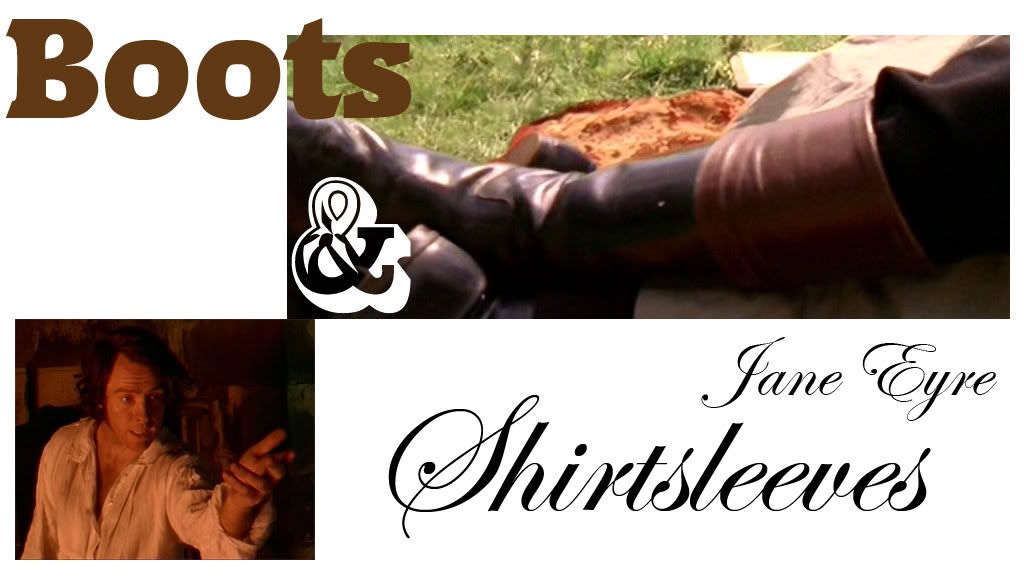
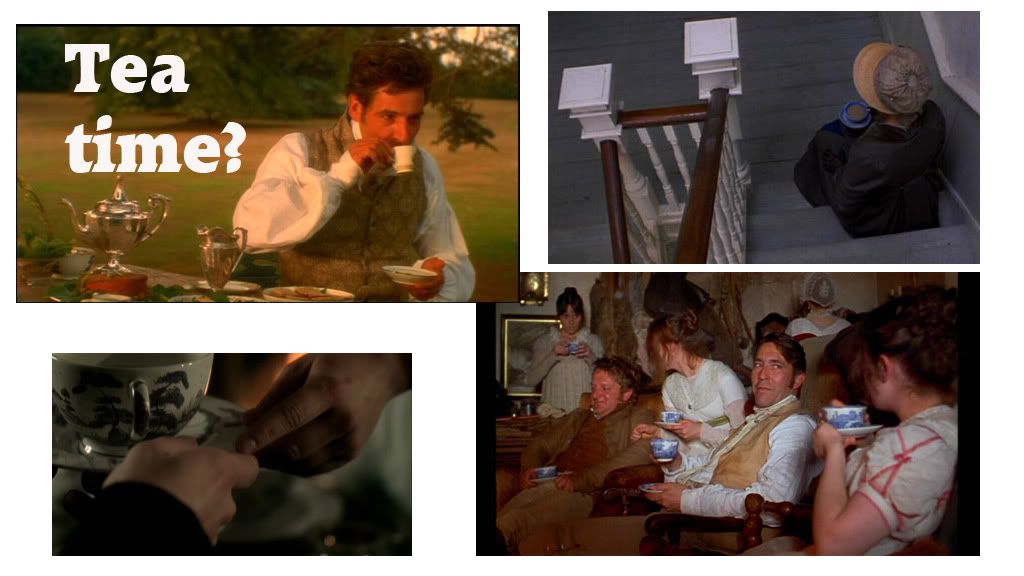
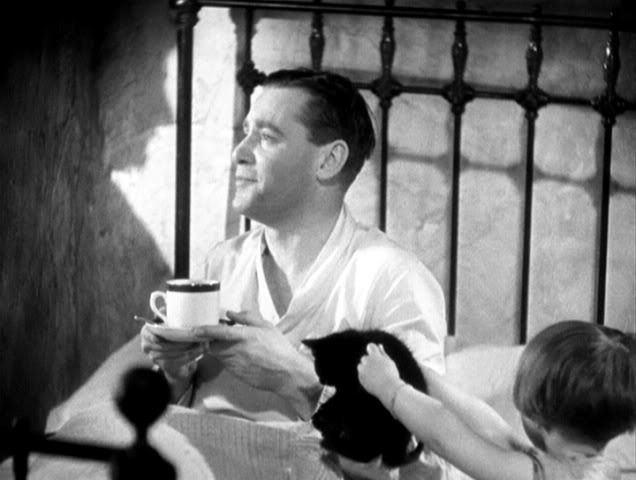
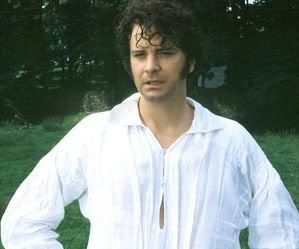
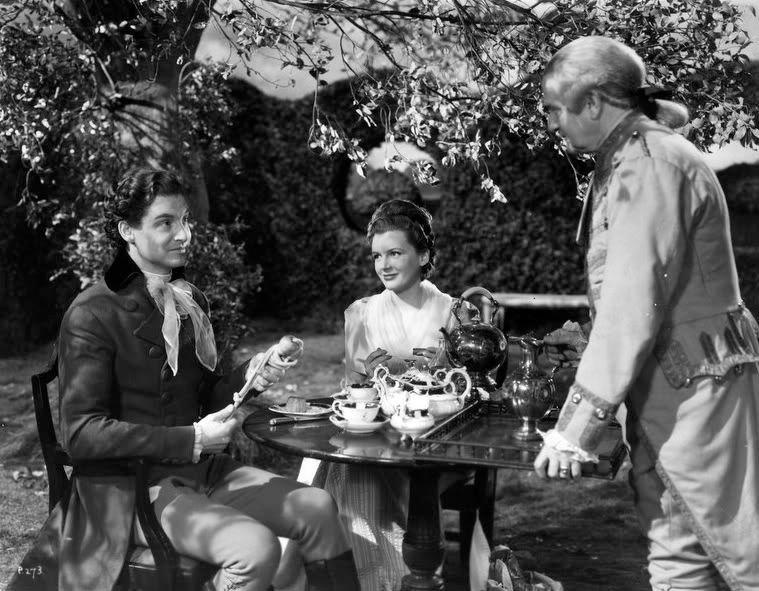
Speaking of madness, I purchased this still to go into my Boots and Shirtsleeves Screensaver folder, which is comprised of photos of actors in period dramas wearing white puffy shirts and/or riding boots. I also have a folder called Time for Tea with just pictures of my favorite actors drinking tea and another called Ungroomed which features pictures of my favorites unshaven and/or with messy hair. Sometimes, a photo will be a twofer, and feature someone with messy hair in shirtsleeves, or wearing riding boots drinking tea or unshaven and in shirtsleeves (as above). If I ever found a photo of one of my favorite actors drinking tea unshaven, with messy hair and in shirtsleeves and riding boots, I would probably have some kind of attack and have to be hospitalized.

Sunday, April 12, 2009

I'm Henry the VIIIth, I am

Once while driving across Iowa during a summer storm, I looked out my window and saw the corn, as high as an SUV's eye, swirling in an ominous cyclonic pattern. My radio which was tuned to the AM weather band, cut out. The air was thick and had a pea green cast and I was certain that I was going to be picked up any moment and hurled to Oz or my death. Suddenly, my radio came back on loudly playing Herman's Hermits "Henry the VIIIth I am." I'm going to die, I thought and the last thing I hear is going to be this ridiculous song. No sooner did this register in my fear paralized brain than my Isuzu Trooper past a line of trees, a shelter belt around a graveyard, and the cyclonic wind stopped. A wall of rain hit the car and the radio returned to static. I drove blindly, my wipers barely keeping up with the rain somehow knowing that I'd escaped the tornado and pondering the significance of a radio signal trapped in weather pattern. Perhaps, I'd merely dreamed the whole thing, like Dorothy.

I bring this up because I recently heard that Alexander Korda got the idea for making his film The Private Life of Henry the VIIIth (1933) when a cab driver began whistling "Henry the VIIIth I am" well known in music halls before Herman's Hermits took it to the rest of the planet, including Iowa. I wonder, what was the weather was like outside that London cab? Raining like mad, I'd bet anything.

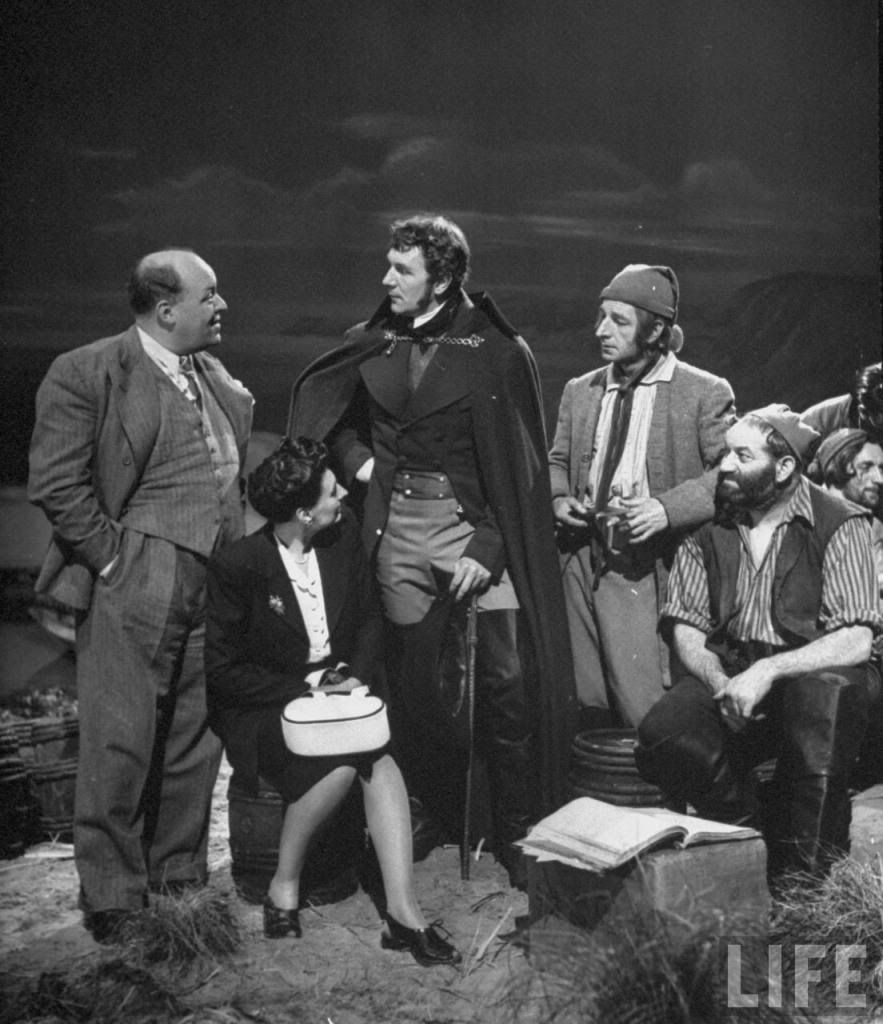
There is another, contradictory tale, about Korda that says that he got the idea for the film while standing under the famous Holbein portrait of the monarch and realizing that he looked a lot like Charles Laughton. I doubt this version of the tale, since Life magazine published a photo of Korda, and Laughton co-star Robert Donat standing underneath that same picture in 1948. Either Life set out to recreate this moment of inspiration or people are remembering a picture they saw and attaching more significance to it than it warrants.

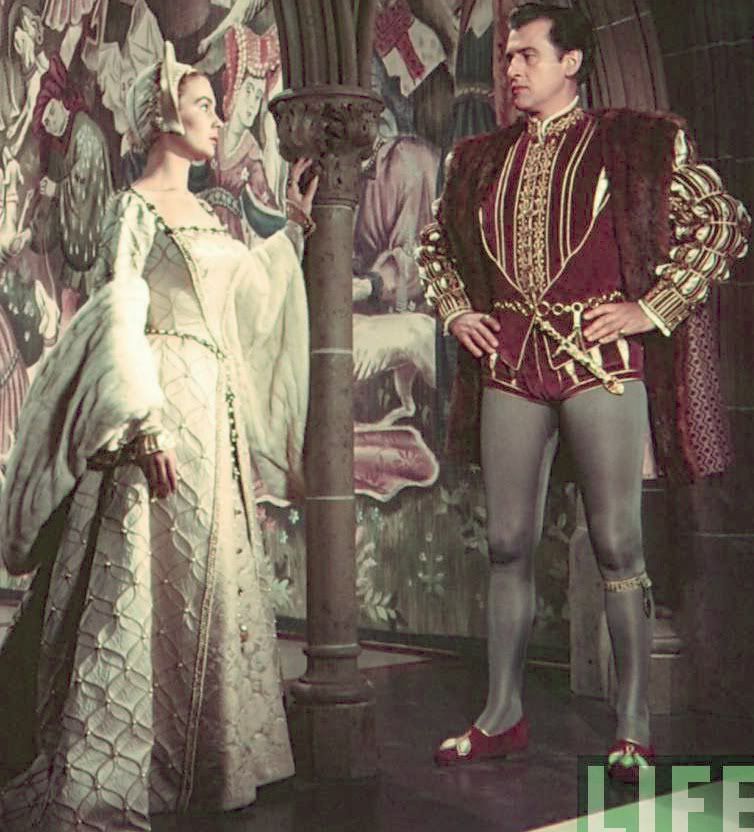
I recently rewatched both of Charles Laughton's performances as Henry the VIII in Private Life and Young Bess (1953) and I'm positive that I assigned a lot more significance to the later performance than it warrants the first half dozen times I watched it. If I believed in guilt I would list Young Bess as definitely among my guilty pleasures having loved the movie for years for it's absurd dialog, Stewart Granger's legs and Charles Laughton's huffing and puffing Henry. His first Henry is tender, childlike and whimsical when he's not lopping off heads, his second is more a collection of tics and catch phrases than a flesh and blood character. I'm sorry to say this, because I love it anyway. It's not just that the movie is so bad it's good, it's that sometimes it's so good, it's good. I love the way that Laughton always stands as if he's straddling and imaginary globe and how Jean Simmons imitates this stance at every opportunity. I love that Bess and Tom (Stewart Granger) always discuss ships and they make talk of mizzen masts and gunwales sound downright naughty. I love the sentimental portrayal of the relationship between boy King Edward and Bess which has more of a basis in the demands of injecting phony "family values" into 1950s movies than with historical reality. (Not that anything in either of the movies is much more than malarkey in that respect. It's not so much what they get wrong, which is quite a lot, it's the over-simplification and over-dramatization of what they get right. Why is that in every movie about Henry the VIIIth he is always out hunting when Elizabeth was born? I've never been able to figure out where that comes from, other than costume drama tradition. )

Lots of actors have played the infamous king, from Richard Burton in Anne of a Thousand Days to Jonathan Rhys Myers in the recent television series The Tudors and most have brought something new to the character, but Charles Laughton pretty much made the template. Far and away my favorite Hank 8 flick is The Private life of Henry VIII (1933). I always think of it as a comedy, though it's usually billed as drama (I guess all those ladies loosing their heads isn't as funny as I think.) The biggest delight is the relationship between Henry and his fourth wife, Anne of Cleves (Laughton's wife, Elsa Lanchester). The pair have great comic timing with one another and despite their divorce Anne ends up being the only wife to remain on friendly terms with her notorious ex. Much of the drama is provided by Henry's fifth wife Katherine Howard (Binnie Barnes) and her lover Thomas Culpeper (Robert Donat). Barnes portrayal is an interesting one, managing to strike a balance between seeming sympathetic and overly ambitious at the cost of her life and her lovers. Donat is great as usual and one gets the feeling that the kind is more hurt by his old friend's betrayal than he is by loosing another wife. The movie ends on an up note with an elderly king henpecked into hiding his turkey legs from sharp-eyed Katherine Parr (Everly Gregg). Merle Oberon has a surprisingly small part as Anne Boleyn, whose story is perhaps too long and complex for the length of the film.

Wednesday, April 1, 2009

The Korda brothers, 1932

Last month TCM highlighted the films of the Korda brothers which was an especially big treat for me. Not only were some of my favorite films shown (That Hamilton Woman, Fire Over England and The Private Life of Henry the VIII) but I got to find see several films I'd never seen before. The excellent Vacation from Marriage, which I've already discussed and the almost equally excellent Wedding Rehearsal and Service for Ladies .

If you are half as fond as I am of Jeeves and Wooster or the world of PJ Woodhouse, you will probably enjoy Wedding Rehearsal . Imagine Jeeves and Wooster where Jeeves is a woman and she winds up marrying Wooster and you'll just about have it right. Roland Young gives an energetic and sparkling performance as Reggie, a gadabout playboy who enjoys his freedom and his bachelor lifestyle (complete with an affair with married woman) so much that when his granny presents him with a list of seven eligible women in England for him to marry he sets about making matches with his friends for all of them. The list is carefully prepared by his gran's companion, Hutchy, (Merle Oberon) who admires Reggie from afar given her status as little better than servant to his family. As in the world of Woodhouse, Reggie's friends are a lot of silly public school men who have names like "Toodles" and "Bimbo" and the women are flighty, rich and spoiled. The first names on his list are the Roxbury Twins, whom it is difficult to tell apart, excpet that one is a dog fancier and the other fancies cats. When the cats and dogs inevitably get together it constitutes a servant crisis as the poor retainers try to extricate the howling, scratching beasts. This is all very funny and since one of the dogs is a wire haired terrier like Asta, I couldn't help but feel shades of screwball comedy.

Reggie manages to get the Roxbury twins engaged to Toodles and Bimbo and it's one of the films best gags that Lord Roxbury refuses to get their nicknames right calling them "Boodles" and "Timbo" most of the time. When all upper crust society gathers for the wedding rehearsal Reggie is given an ultimatum, "get engaged this week-end or start over with next season's debutantes." Unable to face the prospect of more flighty, rich spoiled young women, Reggie does the sensible thing and falls in love with Hutchy. Merle Oberon is adorable looking though underused in her role. I think she can manage the Joan Fontaine routine quite well and it's a shame she didn't get more of these type of roles. She was a fairly able comedian and I've always liked her in the Divorce of Lady X with Laurence Olivier. I can't help but wish she was given just a bit more to do even though Roland Young very ably carries the bulk of the film with his hijinks. Lady Tree is particularly good as the Roxbury the twins' sweet, but dimwitted mother. So lets see you have barking dogs, a ditsy mom, an on again off again wedding, a rich man marrying his gal friday...Are you sure this isn't Columbia Pictures 1937? Nope it's London Films circa 1932 and the wonderful Korda brothers.

As part of my quest to begin to appreciate Leslie Howard I can safely say that I quite enjoyed him in Service For Ladies. I didn't exactly love him, but what can you do? I'm trying here, people. I should like Leslie Howard. He fits into that type I regularly go daffy for: English, stage-trained, handsome, and having the air of a man who is hiding a great deal of something interesting under his cool exterior. I think I've figured out that it boils down to his hair. When he lets his hair get messy he's great, (yay! Pygmalion) otherwise forget it. In Service for Ladies he plays a head waiter who is mistaken for royalty when he goes on vacation at a "winter sports hotel" in Austria. He falls in love with a well to do young American woman (Elizabeth Allan) and perceived class differences on both acounts keep them apart. The movie teases us with plenty of opportunities to mess up Howard's hair, but it never happens. He never goes skiing or ice skating or gets in a snowball fight. It's just not fair, how, long would it really have taken Korda brothers? Is this too much to ask? I think the answer to that lies in the fact that Service for Ladies was the Hungarian autheurs first film for an American company and was made on a total shoestring. Obviously Vincent Korda blew the entire budget for the picture filling every room in the "winter sports hotel" with dead animal heads and had no money left over to do a rear projection skiing sequence or to make a fake ice rink. Darn.

The story is further complicated when the Countess Ricardi (Benita Hume) shows up. It's heavily implied that she and Howard had an affair in the past but that he broke it off. The second half of the film turns into a fun bedroom farce with ladies popping in and out of Howard's room alternately kissing and slapping him. Eventually Howard's status as a head waiter comes out and the couple are sweetly reunited thanks to the good intentions of Howard's restaurant patrons who want nothing more than happiness for their favorite head waiter. So let's see you have a slightly naughty bedroom comedy, a slyly satirical knock at the upper classes, and a grand case of mistaken identity...Are you sure this isn't an Ernest Lubitsch film? Nope, again Korda brothers, 1932!

Wednesday, January 28, 2009

Wuthering Heights: Take any form. Drive me mad.

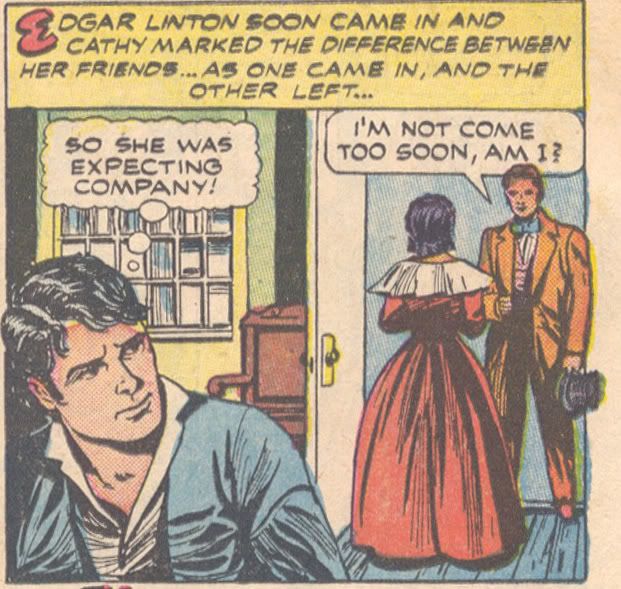
Wuthering Heights exists in many forms. It's a novel, of course, a stage play, a dozen movies, a song by Kate Bush, a classic comic, and a sketch by Monty Python in which the actors use semaphore code instead of dialog.

The 1939 film version was not only my portal to Wuthering Heights, (and the 19th century novel as an afterthought), but more importantly, it was my first cinematic obsession. As a 15 year old I watched this twisted, romantic movie over and over. I recorded my favorite speeches from the film and interspersed them on cassette tapes with pop songs. To this day, when I hear Olivier croak "Haunt me then. Take any form. Drive me mad." I expect to hear it followed immediately by "Can't Stand Losing You" by the Police.

Eventually I read the book. Well, I skimmed it at first, I think. I was confused by the whole second generation and all the other stuff that wasn't in the movie. The Hayes Code and the sensibilities of Hollywood had ground down the story into a shiny fragment of the original tale. As dark and passionate as the film was, it positively bland compared to the book. Or put another way the two are as different as "frost from fire." Heathcliff and Cathy are far more cruel and brutal in the novel and I've yet to find a film version that captures their malevolent essence. (Ralph Fiennes and Juliette Binoche come close, but her accent is a real problem and Fiennes lapse back to his psycho schtick way too frequently.) In the '39 film, Heathcliff and Cathy are the only victims of their suicide by mysterious Victorian illness pact, but in the novel the moors are fertilized with the corpses of Edgar, Isabella, Hindley, Linton, the Lintons Sr. and anyone else who doesn't have the otherworldy consitution to survive a Gothic Romance.

After many more trips through the book, I've begun to think that though the basic story is very compelling and cinematic, the novel is unadaptable. Part of the problem is that the story is told mostly in flashback with the narrator dropping in on the characters every three years or so. This means you have to either hire 5 actors to play Heathcliff or put up with a 30 year old man prancing around the moors picking wild flowers.

The latest incarnation of Wuthering Heights is ITV-produced miniseries (after five attempt by the venerable BBC, the novel is turned over to the "other" flashier network in Britain) which stars Tom Hardy and Charlotte Riley as Heathcliff and Cathy. Like the rest of the adaptations this one is a mixed bag of good and bad. Excellent casting, acting (Hardy might be the best Heathcliff ever) and a sincere attempt to reveal some of the more mysterious corners of the novel are muddled by a script that plays fast and loose with the timeline for the purpose of upping the soad-opera quotient, dumps the narrative structure and religates the ghost story to an afterthought. I could have lived without the ghost, actually, I think there is a very valid reason to do a rationalist intepretation of the story, where the ghost is all in Heathcliff's head. The novel ends with Lockwood, the narrator taking the opportunity to use the last words in the book to reject the idea of the ghost lovers. The filmakers bravely walked down this route until the final shot of Heathcliff and Cathy looking out a window together echoing the classic ghosts walking off into the sunset ending of the 1939 film. William Wyler famously objected to that in his film, but the studio insisted it be done, and almost to spite him, every WH film since has echoed it in some way. The trope even shows up in Alex Cox's brilliant 1986 film about doomed and epically annoying lovers Sid and Nancy.

The 2008 adaptation begins to address some of the shadowy questions about Heathcliff's provenance, suggesting quite openly that Heathcliff may be Mr. Earnshaw's illegitimate son. There are some hints that our anti-hero may have actually murdered Hindley, and that given a different set of circumstances Hindley and Isabella might have made a fine couple. With three graffic sex scenes this is certainly the raciest Wuthering Heights ever. It's refreshing to see an adaptation actually take a stand on this question even if they wimped out a bit by changing Heathcliff and Cathy ages to early twenties instead of 15 and 16 which they are at that particular point in the novel. Not that I want to see underage kids going at it, but that nod to contemporary mores is just one of the many ways that filmmakers water down this staggeringly inappropriate love story. And yet they made Heathcliff's obsession with Cathy's dead body even more grotesque than it was in the book. What does this say about our society? I guess we are are pretty comfortable with decomposed corpses from watching millions of collective hours of Cold Case Files, CSI and the like. And we thought the Victorians were morbid.

I still have many mini series adaptations to wade through, should they ever make their way onto Youtube. Like Heathcliff, I'll scan the horizon for whatever new forms this endlessly fascinating novel chooses to take to haunt me. Wuthering Heights the sock puppet play is sure to be along any day now.

Wednesday, November 19, 2008

First Comes Courage (1943)

Merle Oberon and Brian Aherne in the wartime spy drama, First Comes Courage (1943).

First Comes Courage is saved from being a rather forgettable bit of wartime propaganda by some interesting direction by Dorothy Arzner. Though it was dismissed in its day by critics as ordinary and mediocre, Arzner's talents as a director have been more greatly appreciated in hindsight. I think that First Comes Courage, her last movie, was more influential than even the revisionist feminist critics imagined.

One film that First Comes Courage seems to have influenced quite a bit is Alfred Hitchock's Notorious (1946). Though Notorious is admittedly a superior work in every respect, there are a number of plot similarities, at least one actor who plays a similar role in both films and a striking use of a wine cellar as suspense device. First Comes Courage is the story of a female underground agent, Nicole Larsen (Merle Oberon), in Norway who is willing to make love to a German officer (Carl Esmond) in order to gain valuable information. One evening while entertaining an important senior officer (Reinhold Schunzel, best known as "kind faced" Mr. Anderson from Notorious) her boyfriend begins to suspect that she is responsible for a series of raids. With her position threatened, the Allies send a former lover Allan Lowell (Brian Aherne) to assasinate the officer. Lowell's plan of attack and rescue is intricate to the point of ridiculous and its not a huge shock when it goes horribly wrong. Oberon and another member of the underground, a nurse in the prison ward in the hospital, manage to break Lowell out of jail and he hides out in her wine cellar. In one scene Oberon appears in the doorway of the cellar in a backlit sillouette that is an exact match to several of the wine cellar shots in Notorious.

To further dispel suspicion and to gain even greater access to information Oberon agrees to marry the German officer. Naturally this causes a bit of tension between the recently reunited couple. When Nicole's new husband realizes that she leaked information leading to a raid on a munitions plant he threatens to kill her in faked car accident. (Is any of this sounding familiar? Yeah, I thought so too. Poor Emil Hupka.) After the raid is successful Allen rushes to Nicole's house and shoots her husband before he can kill her. The pair move his body so that it looks like he was heroically killed in the raid. Allan begs Nicole to return to England with him but she refuses, reasoning that as the widow of a German war hero she will be more valuable than ever.

The script is a bit talky and Arzner's attempts to build suspense from it are not always successful. I can't help but think if Hitchcock was watching and taking notes, he thought of ways that he would have done things differently. For example, the audience doesn't know that Nicole and Allan are former lovers until after they are reunited on screen. I think the tension would have been far greater had we known that ahead of time. As it is the intercutting between Nicole and Allan's sides of the story seems a bit weird and jumpy. Despite these flaws, First Comes Courage is well worth watching if you get the chance.